Sheraton Milwaukee Brookfield
Brookfield, WI
When Scale Outruns Discipline
Reviewed by Roland Guard · January 14–16, 2026 · 15 min read
Executive Summary
Conference hotels reveal themselves in the margins. Not in the ballroom during keynote hour—but at 4:45am in the parking lot, in the ergonomics of a guestroom desk, in whether housekeeping solves problems or quietly creates new ones.
Over a two-night stay during an active fishing conference, the Sheraton Milwaukee Brookfield presented a clear picture: this is a hotel with demand, but without sufficient operational discipline to fully earn it.
"The Sheraton Brookfield succeeds because demand exists — not because systems are tight."
Arrival: Efficient, But Thin
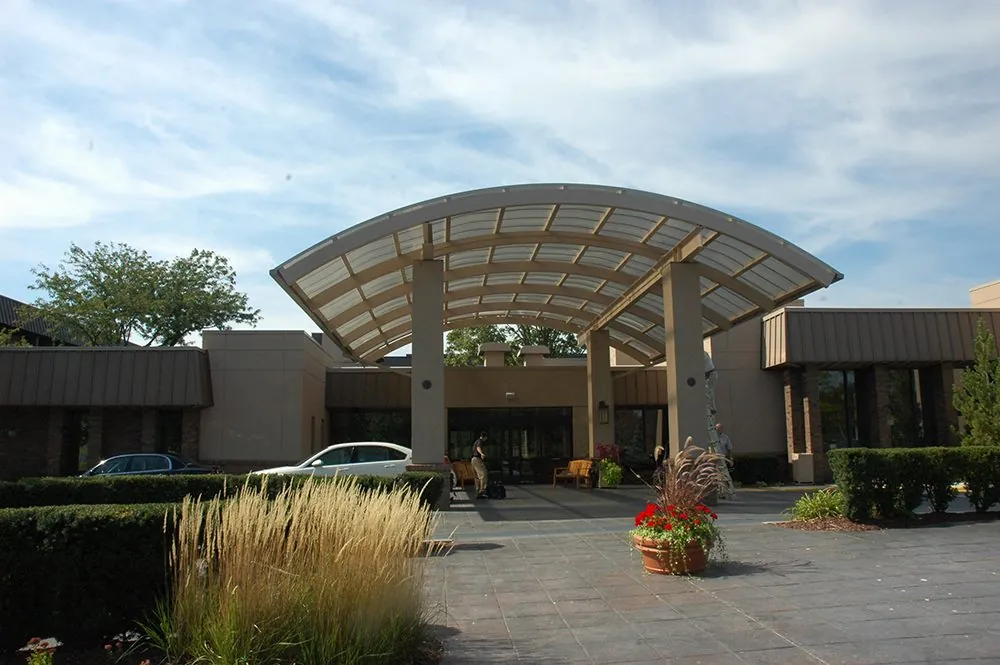
Arrival metrics were solid on paper. From parking to lobby took just over four minutes, and time-to-key was under two. At noon, two front-desk agents handled a light queue calmly and professionally.
And yet, something was missing.
No Bonvoy upsell. No early check-in offer. No attempt to reinforce loyalty or capture incremental revenue. For a Sheraton serving business travelers, that silence is telling.
Queue design devolved into a familiar "chaotic blob," mitigated only by guests' own line discipline. Staffing flexed down quickly later in the day—one agent, five-minute waits—suggesting labor deployment optimized for cost, not flow.
"Front desk staff were capable — but coverage felt conservative, reactive, and thin."
Weather, Back of House, and the First Cracks
Snow fell overnight, but by noon the next day, removal was still patchy. In Wisconsin, winter ops aren't optional—they're baseline competence.
At 4:45am, with the main lot nearly full, the rear receiving area told a harsher story: trash, random items, and visible disorder. Back-of-house chaos eventually leaks into front-of-house experience. It always does.
Conferences: Booked Well, Executed Casually
The hotel clearly knows how to sell conferences. Digital signage welcoming groups was effective, and a small in-room gesture (Swedish Fish for fishing conference attendees) was genuinely thoughtful.
But execution wobbled.
- Conference signage was sparse.
- A conference welcome card landed in a non-conference room.
- Overheard staff commentary—"I don't know what happened there"—suggested that complaining about conference disorganization is culturally normalized rather than operationally resolved.
"The hotel books conferences successfully, but hasn't professionalized the culture of conference execution."
The Lobby Problem: Waiting, Not Working
At 3:15pm, only three people were working in the lobby—and that wasn't because demand was low. It's because the lobby is not designed for work.
There is one semi-ergonomic shared desk seating six. That's it. Power is scarce. Seating geometry is hostile to laptops. During conferences, overflow tables consume secondary lobby space, displacing independent business travelers entirely.
On January 16, conference tables overtook the off-lobby area, forcing non-conference guests to work in the main lobby—directly in front of the entrance, blasted by cold air.
"This is a lobby built for waiting and mingling, not for modern business travel."
Food & Beverage: One Department Gets It Right
Evening bar operations worked. At peak, the bar reached ~70% capacity and absorbed conference energy comfortably. The restaurant, by contrast, hovered around 20% occupancy, functioning more as a holding area than a dining destination.
Breakfast, however, was a bright spot.
Service was prompt. Tables turned efficiently. Staff actively checked in with guests while keeping flow moving. Estimated table turnover—20 to 25 minutes—was impressive given the group context.
"If one department understands the balance between hospitality and profitability, it's breakfast."
That said, sanitation details undermined confidence: unwiped booths, crusty salt and pepper shakers, and unclear communication that breakfast costs $15.
Guestroom Reality: Where Trust Erodes
This is where the Sheraton Brookfield struggles most.
The room is not built for business travelers. There is no real desk—only a high side table paired with a low, heavy, non-adjustable chair. The posture is unsustainable. Work becomes a physical chore.
Operational issues compound the problem:
- Exterior door handle and lock function poorly
- Toilet requires multiple flushes
- A lamp flickers continuously
- Elevator service is slow
Housekeeping failures are more concerning:
- Other guests' long hair found in the shower and on washcloths
- Mismatched, yellowed linens
- Thermostat reset while the guest was out (a cost-saving move that breaks trust)
One detail captures the dysfunction perfectly: the attempt to "prove" unused toilet paper by wetting the roll so it sticks—damaging dozens of sheets in the process.
"This looks like a system where housekeepers are audited on supply counts, not guest usability."
Housekeeping Culture: Present, But Uncontrolled
Repeatedly, housekeeping staff were observed congregating, using phones, and working from disorganized carts. Supervision appeared minimal. Standards varied wildly.
This isn't a staffing shortage problem. It's a quality control and incentive alignment problem.
Checkout: A Clean Finish
Checkout at 10:45am was fast and efficient. One agent handled a short queue smoothly. It was, fittingly, one of the cleanest operational moments of the stay.
Final Verdict: Adequate, But Undisciplined
The Sheraton Milwaukee Brookfield is a hotel that functions, but does not yet excel. It benefits from steady conference demand, but relies too heavily on individual effort and improvisation rather than tight systems.
"This property is one strong breakfast team away from mediocrity — and one housekeeping failure away from distrust."
Roland Guard Operator Rating
What Works
- •Conference sales and occupancy
- •Breakfast operations
- •Bar as a social decompression space
- •Generally capable front-desk staff
What Fails
- •Business-traveler ergonomics
- •Housekeeping quality and supervision
- •Back-of-house organization
- •Consistent sanitation standards
With modest but focused intervention—particularly in housekeeping controls, lobby workability, and conference ops culture—this property could materially improve guest trust. Until then, it remains a conference hotel whose scale has outpaced its discipline.