Renaissance Chicago North Shore
Northbrook, IL
Luxury Design, Fractured by Friction
Reviewed by Roland Guard · April 2026 · 14 min read
Executive Summary
Renaissance Chicago North Shore presents itself as a luxury-designed property in listings and images. The lobby photographs well, rooms are contemporary, and the amenities indicate a high-end North Shore base for work and leisure. However, the stay revealed a different reality on site.
Staff friction, understaffing, and inconsistent service repeatedly fractured the guest journey, leaving a visually impressive hotel that feels empty and underperforming its potential.
"The Renaissance North Shore succeeds in photos. Not in practice."
Promised Brand Image vs. On-Site Reality
The hotel markets itself well. Photos are polished and reviews trend positive, making the case for a newly renovated four-star property with a modern design and solid dining variety. The bar is set before anyone walks through the door. This raises guest expectations for smooth service and reliable hospitality at a premium price point. On site, the building delivers on design while operations deliver a midscale, low-quality experience.
The most striking disconnect lies in occupancy and energy. For an establishment that seems like a popular destination online, the parking lot and public spaces were sparsely populated. This is the consequence of commercial friction. When the experience fails to match the promised standards, guests do not return, and bookings are lost to competitors—despite having an appealing physical property.
Arrival: Efficient on Paper, Silent in Practice
Arrival was simple. Three minutes from car to lobby, no friction in wayfinding. Then the revolving entrance door stuck for nearly thirty seconds and the first tells of friction unraveled. However, the lobby itself fulfilled the brand promise, with modern finishes and good natural light that made the space feel intentional and contemporary. This is the side of the property depicted in the photos.
The check-in process took around three minutes with one desk associate and no queue. Although smooth, the transaction was almost entirely silent. There were no upgrade promotions and no verbal guidance to the bar or amenities. In an era where well-timed upsells and journey guidance are proven drivers of revenue and loyalty, this silence speaks.
Operator takeaway: Front desk handled logistics. Revenue and experience were left on the table.
Rooms: Luxury Shell, Weak Housekeeping
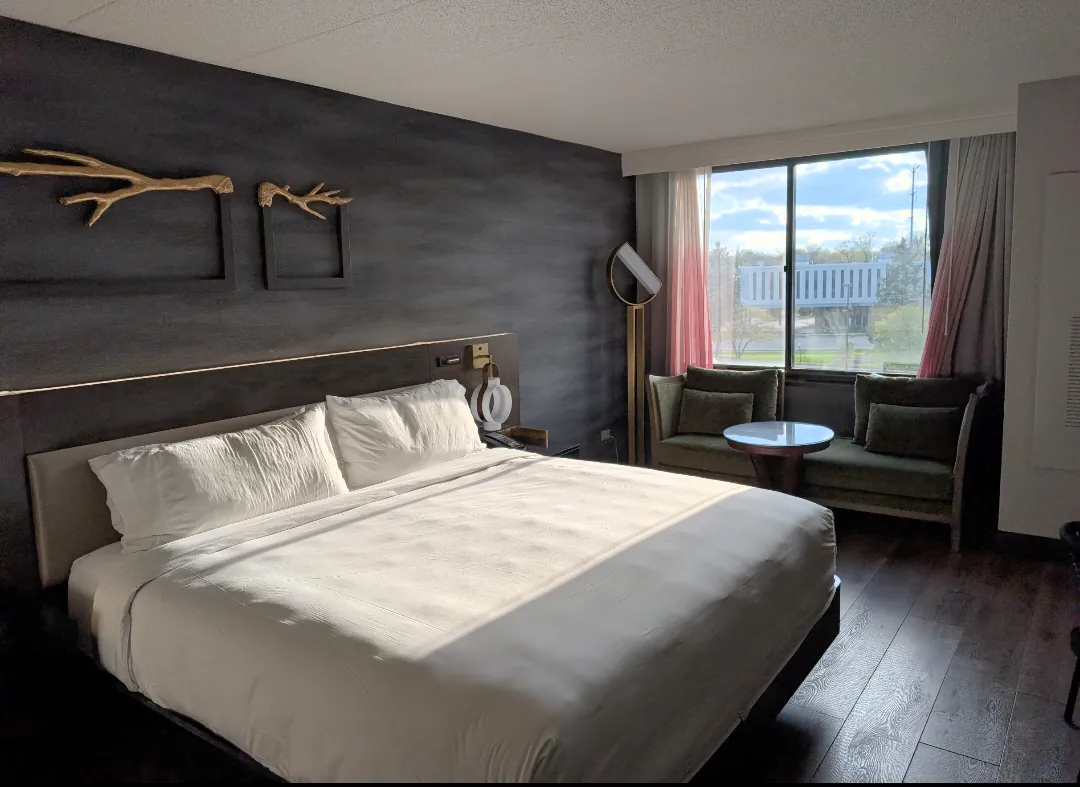
Guestrooms and bathrooms are, by design, the strongest aspect of the property. The room itself earns its rate. Furniture is solid, bedding comfortable, and the bathroom is stocked thoughtfully with multiple towel sets and soap options. Storage is generous, making it practical for business travelers and longer stays alike. When clean and intact, these rooms deliver on the promise that the website sells.
Housekeeping and maintenance performance undercut that promise. In the first room, damaged furniture, a dirty comforter with visible lipstick and hair, loose screws in multiple places, and dust on bedstands were all present. Stale water bottles left on the nightstand made it clear the room had not been properly turned. The issues were significant enough to trigger a room move. The new room, on a higher floor, was an upgrade in location and condition, but the attempt to upsell during the resolution of a cleanliness failure shows misaligned incentives. Service-recovery literature is clear that recovery moments should rebuild trust, not pursue incremental revenue.
Across upscale hotels, this pattern is common. Capital goes into design and renovation, but quality control, maintenance routines, and housekeeping supervision lag behind. Maintenance delays and visible cleanliness failures are consistently cited as major drivers of negative reviews and revenue loss in the hotel sector. A comforter with lipstick and hair in a "luxury" room does more damage to pricing power and repeat intent than any design flourish can repair.
Operator takeaway: This looks like a property audited on aesthetics, not on guest usability.
Building and Amenities: Strong Ideas, Incomplete Follow-Through
In the broader building, the same tension appears. Elevator floor lights were broken and cracks visible in the flooring—simple items that should be caught by routine inspections and corrected quickly. At the same time, the shuttle service ran reliably, which is a genuine operational strength in a suburban North Shore location with corporate and events demand.
Amenity thinking is sound on paper. The property includes a billiards table, fitness options, and multiple on-site dining outlets. Execution is inconsistent. The pool table lacked chalk and was positioned next to a wall in a hallway, making actual play awkward at best. This is a perfect example of half-finished thinking. The amenity exists and can be photographed, but the real guest use case is friction-filled and unsatisfying. The hotel offers the idea of a lifestyle feature without investing in its full usability.
At one point, the bartender was working the front desk. That kind of crossover is not always a problem, but it is a signal. When it shows up alongside visible frustration and uneven service, it stops being a scheduling quirk and starts looking like a property that has cut too deep into its own foundation.
Food and Beverage: Staff Friction in Full View
Food and beverage is where staff friction becomes unavoidable and publicly visible. The property offers an upscale steakhouse and a smaller bar or Italian concept, a mix that, on paper, should support both destination dining and casual on-site options. However, signage and on-property promotion were minimal. Guests must already know or go looking, which depresses capture and spend.
Inside the steakhouse, staff behavior conflicted directly with the luxury pricing and positioning. On entry, employees were heard complaining and then ignored arriving guests, serving someone who entered later first. Menus were missing pages, with gaps patched by borrowing from the bar. Water glasses arrived warm from the dishwasher, the back bar was poorly lit and disorganized, and televisions showing random channels pushed the atmosphere toward casual sports bar even as check averages could reach hundreds of dollars per person.
Internal friction among staff was open and unfiltered, including arguing and complaining in guest view. Staff showed skill in suggesting upsells but stumbled on execution, with incidents like breaking dishes in front of guests and boxing food in the open next to piling dirty dishes. These are not isolated mishaps. They are signs of a culture where stress and misalignment are high and standards are enforced weakly.
"The steakhouse priced like a destination, but staffed like a sports bar."
Industry work on staff morale and guest experience is clear. Unhappy or overextended teams produce inconsistent service, lower satisfaction scores, and weaker revenue performance. In premium and luxury-leaning environments, the damage is amplified because the gap between what is promised and what is delivered is larger. Guests who feel ignored at a premium price point do not leave neutral. They leave with a reason to warn the next person considering the same booking.
Breakfast: Capable Execution, Hidden Value
Breakfast operations told a different story. The hotel offered a buffet with a personal server, and the service experience there was smooth and competent. Food and flow worked, and the environment felt calm rather than chaotic. The friction was upstream. Signage was minimal, and very few guests were present, despite the scale of the property.
This is friction by omission. A solid product exists but is not clearly explained or promoted at check-in, on key cards, or through in-room materials. For a hotel that feels under-occupied, every under-utilized outlet is a missed opportunity to improve satisfaction and increase total revenue per guest. Breakfast here is not a liability; it is an asset that operations fail to surface.
Checkout: A Clean Finish
Checkout was easy and quick, with no notable friction. That clean final touch matters. It prevents further damage and sends guests out without additional frustration. It does not, however, erase the earlier pattern of friction across rooms, F&B, and basic maintenance.
A Familiar Pattern in Upscale Hotels
What emerges at Renaissance Chicago North Shore is not unique to this property. Many high-end and upper-upscale hotels now operate with a sharp divide between physical design and operational discipline. Capital projects upgrade lobbies, guestrooms, and bathrooms, while staffing, training, and supervision are managed with a cost-first lens. The result is a luxury shell staffed like a midscale roadside property.
Research on guest experience and revenue repeatedly shows that the guest journey, not just the physical plant, drives pricing power and revenue metrics. A one-point improvement in review scores can lift RevPAR meaningfully, and much of that movement comes from eliminating friction in basic moments rather than adding new amenities. Unfriendly or disengaged staff create a ripple effect that depresses loyalty, reduces direct bookings, and erodes rate integrity.
Conclusion: Luxury Design, Operational Drag
Renaissance Chicago North Shore is a luxury-designed property constrained by staff friction and weak operational systems. The building, rooms, and amenity set are competitive for the market and align with the brand story seen online. On site, thin staffing, visible employee frustration, inconsistent housekeeping, and disorganized F&B execution break the guest journey in ways that guests remember.
The fix is not another renovation. It is a reset of standards, incentives, and training around one simple idea. Design sets the stage, but staff behavior and friction management decide whether guests feel they received the experience they were sold. Until that gap is closed, this hotel will continue to look like a success in photos while in reality it feels like a shell of former glory.
Roland Guard Operator Verdict
What Works
- •Room and building design quality
- •Shuttle service running at all times
- •Breakfast operations and service flow
- •Core amenity variety on paper
What Fails
- •Housekeeping standards and supervision
- •F&B service culture and execution
- •Deferred maintenance throughout the building
- •Staffing depth and cross deployment
- •Wayfinding and amenity promotion
Operator Rating
"This property is one service-standard rework away from delivering on its promise. Until then, the design and marketing will keep writing checks the staff cannot cash."