Operator's Note: DraftKings Sportsbook at Wrigley Field
The Championship Was on the Screens — But Not in the Room
Reviewed by Roland Guard | College Football Playoff National Championship
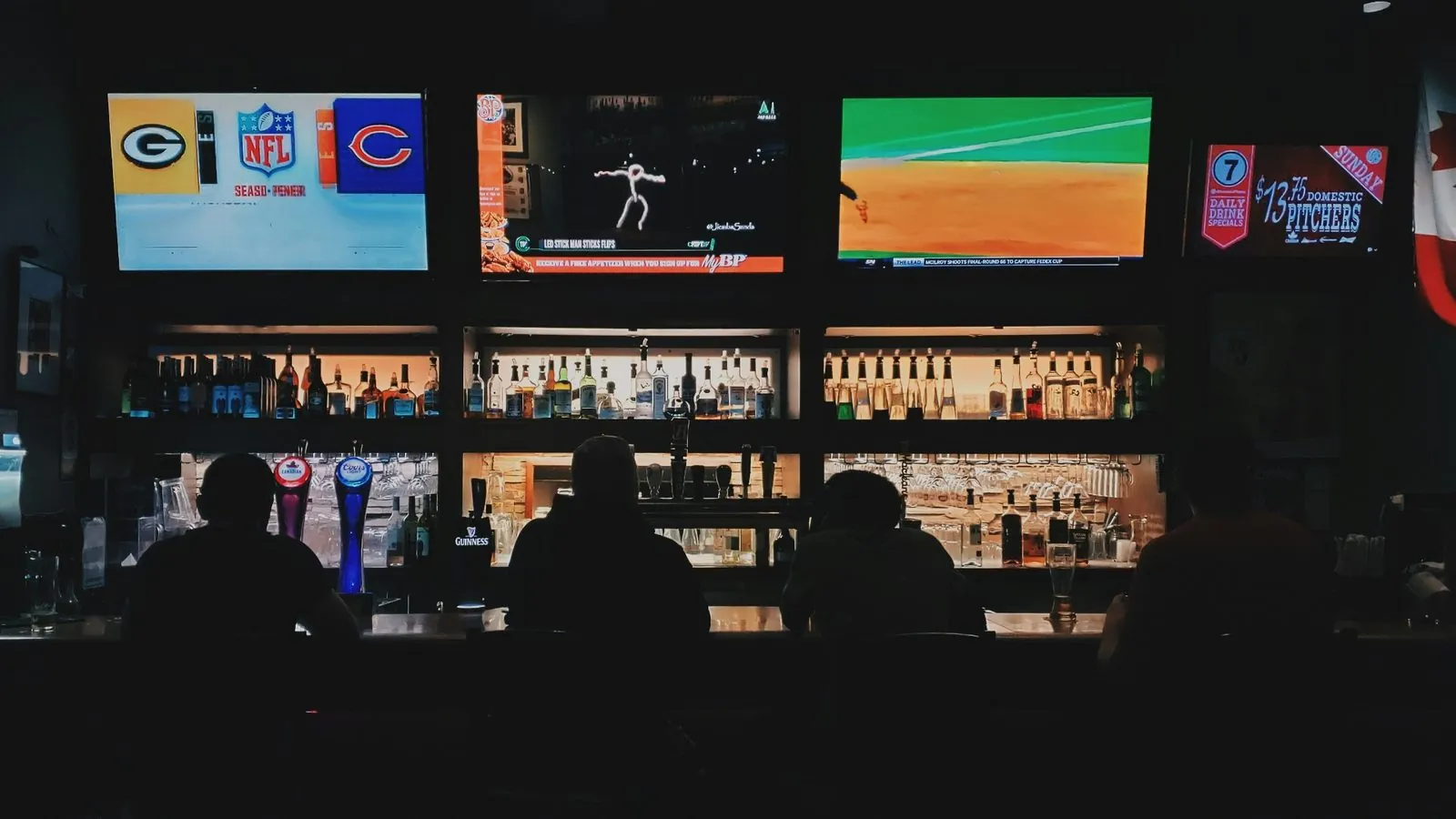
Venue
DraftKings Sportsbook at Wrigley Field
Event
College Football Playoff National Championship
Observed Capacity
~85% seating / ~35% bar / ~5% back bar
Conditions
Cold Chicago winter evening, pre-halftime → halftime
The Short Version
This was the biggest game in college football — and the room never decided to act like it.
Attendance was solid. Infrastructure was intact. Staffing was present. And yet: energy stalled, circulation froze, and monetization nodes sat idle during what should have been the most active wagering window of the year.
This wasn't a demand problem. It was an orchestration failure.
Who Was Here — And How They Behaved
The crowd was almost entirely groups. Very few solo patrons. In sportsbook economics, that's a gift: groups talk, react, follow cues, and spend socially.
Instead, groups arrived, anchored early, and stayed put.
Even scoring plays generated only brief, localized reactions. Outside of touchdowns, the dominant emotional state was passive consumption — guests watching, not participating. Halftime, normally a natural circulation moment, produced almost no movement at all.
Seating Was Full. The Bar Wasn't.
This was the most revealing imbalance of the night:
- Main seating~85% full
- Bar closest to screens~35% full
- Back bar behind group seating~5% full
Large areas of high-yield real estate sat empty, compounded by poor sightlines and no activation cues. Guests consistently chose comfort and personal space over proximity to energy — because nothing was pulling them forward.
A room that looked healthy on occupancy metrics while underperforming dramatically on yield per guest.
Betting Infrastructure Without Betting
Shortly before halftime — a prime wagering window — the betting operation was effectively dormant:
- • One customer at the betting cage
- • Four idle staff at the window
- • Fourteen automated kiosks unused
- • Bartender unsure where kiosks were located
No prompts. No signage urgency. No narrative around betting moments.
The infrastructure existed, but it was disconnected from the guest experience. In practice, wagering was invisible.
Entrances, Weather, and Missed Foot Traffic
One major entrance was closed, leaving a single primary access point on Addison Street.
In winter conditions, this matters. Cold weather doesn't eliminate intentional guests — it eliminates marginal guests. Those marginal guests are disproportionately bar-oriented, impulse-driven, and high-yield. Limiting access narrowed the audience before they ever made a choice.
Halftime Without a Pulse
Music during commercials was directionally correct — but insufficient.
No DJ. No focal point. No escalation.
The environment during halftime felt sterile. Even patrons who showed up for the game appeared disengaged. The merchandise shop, typically a halftime diversion, was completely empty.
Halftime passed as dead time — when it should have been a reset.
What Actually Went Wrong
This venue was optimized for static viewing, not dynamic participation.
Once guests sat:
- • Nothing encouraged movement
- • Nothing rewarded circulation
- • No staff conducted energy
- • No zone demanded attention
The sportsbook captured attendance but failed to capture momentum. That distinction is everything.
The Roland Guard Lens
Crowds do not self-organize into optimal flow.
They respond to:
- • Signals
- • Prompts
- • Friction
- • Permission
Without orchestration, even a championship becomes background television. This night didn't fail because of weather, fandom, or facilities.
It failed because flow was unmanaged. And flow — not capacity — is where yield, memory, and loyalty are created.
Appendix: 3 Small Interventions That Would Have Materially Changed This Night
These are low-cost, low-risk, high-leverage moves — no remodels, no new tech.
1. Halftime Re-Anchoring: Force Circulation
Intervention:
At the 5-minute mark before halftime:
- • Audible announcement + screen overlay: "Halftime wagering window open — odds updating now."
- • Staff physically directing guests toward betting kiosks and bar rail
- • Temporary lighting + audio escalation in bar zone
Why it works:
Halftime is the only universal reset moment. Guests are already cognitively unanchored. Without direction, they default to sitting. With light orchestration, you reclaim momentum.
2. Bar as the Emotional Center (Not Just a Service Counter)
Intervention:
- • Assign one staff member as a bar activator, not a bartender
- • Micro-scripted prompts: "Odds just moved — kiosks are open" / "Best sightlines are open at the bar"
- • Remove visual friction (clear empty tables, open standing room)
Why it works:
Guests don't self-organize toward bars anymore. Someone has to conduct the room. One human signal outperforms ten signs.
3. Betting Visibility & Staff Awareness Fix
Intervention:
- • Every front-of-house employee can answer: Where kiosks are, what moments are bettable right now
- • Light up kiosks visually during peak windows
- • Collapse unused betting staff into active guest prompting
Why it works:
Idle betting infrastructure during a championship isn't neutral — it's a yield leak. Visibility and staff confidence alone would have multiplied engagement.
Operator's Notes are short-form field observations intended to surface structural patterns, not to substitute for a full multi-day Operator's Review.