SFVegas Ramp-Up at ARIA
Strong Revenue Capture, Systemic Friction Across the Corridor
Field Dates: February 21–24, 2026
Reviewed by Roland Guard · February 2026 · 14 min read
Executive Summary
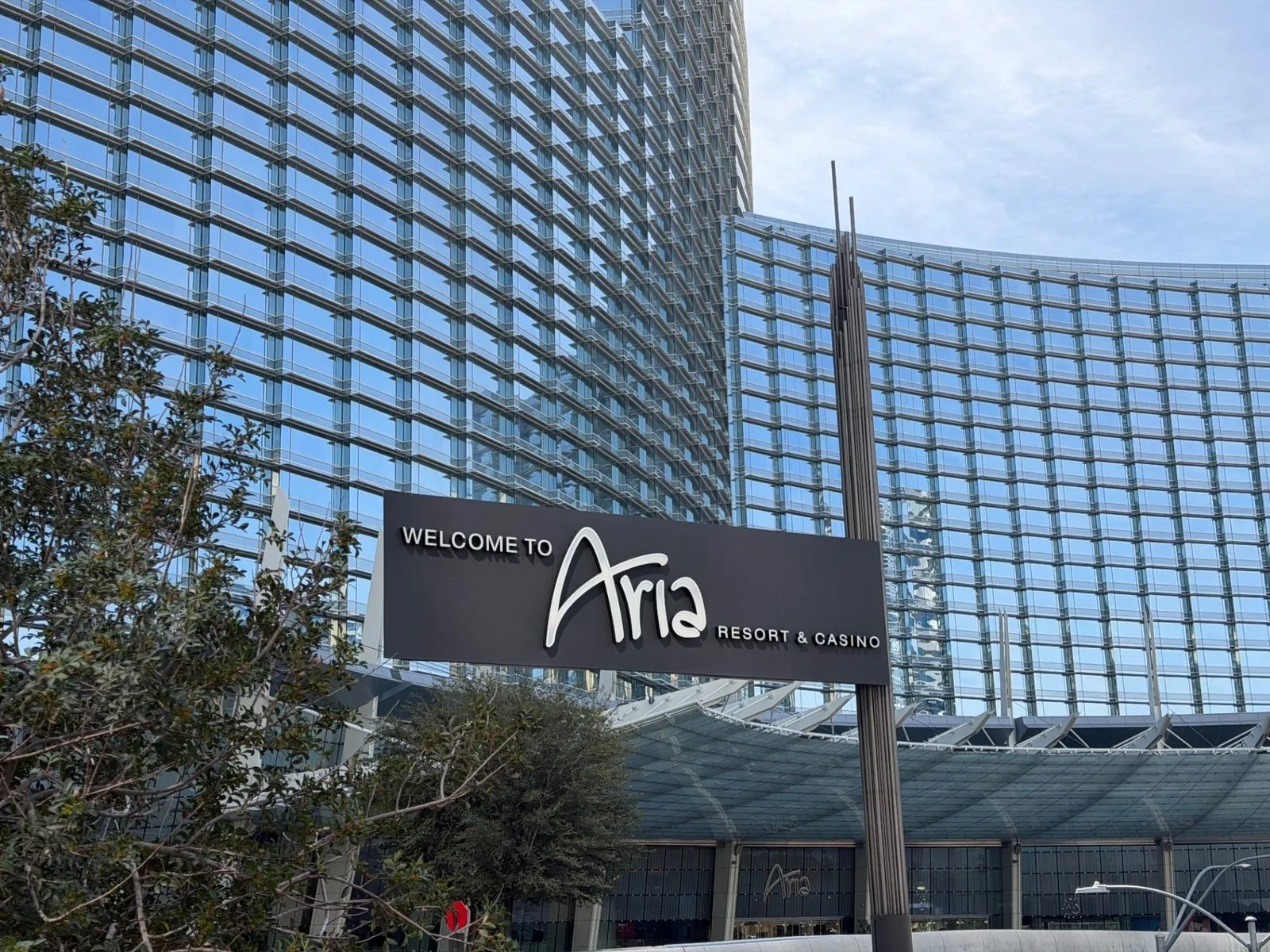
SFVegas 2026 demonstrated how a concentrated finance conference can materially reshape revenue flows across a tightly clustered Strip ecosystem. ARIA successfully captured gaming and premium dining revenue, but under-optimized food court yield and wayfinding clarity.
Cosmopolitan benefited from meaningful spillover traffic but revealed systemic technology and communication failures that risk eroding loyalty among a high-value demographic.
Across properties, four patterns emerged:
- Conference Compression Drives Gaming & Bar Revenue, Not Food Courts
- Technology Failures at Cosmopolitan Undermine a Digitally Native Brand
- Queue Management & Wayfinding Gaps Create Avoidable Revenue Leakage
- Staffing Elasticity is Inconsistent Across Time Blocks
1. Conference Compression = Gaming & Power Bars Win, Food Courts Lose
Observations at ARIA
- –Poker room operating at ~95–100% capacity Sunday evening
- –Table games filled with finance attendees late night
- –Select restaurants (Javier's) and certain bars captured significant networking traffic
- –Starbucks queues manageable but steady; health juice vendor had disproportionate demand
- –Food court underperforming at dinner (~40% capacity at prime time Sunday)
- –Breakfast Monday surged to ~90% capacity, yet only one restaurant open early
Interpretation
Conference attendees value proximity, reputation, and networking density. They cluster in bars and premium dining venues. They prefer "power spaces" over generic food courts.
Missed Opportunity
ARIA's food court did not align with the health-conscious, time-sensitive finance demographic. Additional early openings for short-duration conferences could materially increase F&B yield.
Revenue Reality: Gaming and curated F&B venues are the true economic beneficiaries of SFVegas — not general food court offerings.
2. Cosmopolitan Technology Failures Undermine Loyalty
Cosmopolitan saw meaningful spillover from SFVegas, yet operational systems repeatedly failed.
Documented Failures
- Paid $350 balcony upgrade not reflected in room assignment
- "Automated systems error" prevented room-ready notification
- In-room phones nonfunctional for multiple days
- Chatbot interface rigid and unintuitive
- Keycard/app failures creating visible guest frustration
- Late checkout not communicated to housekeeping (twice unannounced entry)
- MGM rewards account not proactively recognized at check-in
- Elevator indicator lights dim and hard to use
- Visible facility staff without uniforms or vendor markings
- Uncleanliness incidents (condom near escalator, restroom debris)
Counterbalance
- Front desk recovery efforts were strong
- Late checkout comp helped repair goodwill
- Hospitality tone remained professional
Strategic Risk
Cosmopolitan markets to a younger, tech-forward demographic. Technology friction contradicts brand positioning. Repeated "system errors" bleed trust — especially among finance professionals accustomed to precision and operational reliability.
3. Queue & Wayfinding Friction = Revenue Leakage
Key Incidents
- Bellagio Patisserie: 50+ person line → visible customer abandonment
- Mon Ami Gabi queue stretched across Paris entrance, disrupting ingress
- Wells Fargo event queue improperly staged at Cosmopolitan walkway
- Broken escalators within CityCenter corridor
- Aria ceiling drip persisted four consecutive days
- Makeshift taped signage during conference
- Caesars gift shop: small queue discouraged purchase
Behavioral Insight
Guests abandon purchases when queue exceeds tolerance threshold (~5–7 people at low-ticket retail), signage is unclear, or pathways feel chaotic. Even minor friction causes measurable revenue loss. When density increases, micro-inefficiencies compound exponentially.
4. Staffing Elasticity is Uneven
Understaffed Moments
- Bellagio Patisserie peak
- Health juice vendor at ARIA
- Conference early breakfast capacity
- Cosmopolitan tech support channels
Overstaffed Moments
- –Venetian & Palazzo table games (7–8 idle dealers at 2am)
- –Bellagio Patisserie Tuesday mid-morning (6–7 staff for minimal queue)
Staffing alignment with demand remains reactive rather than predictive.
Cross-Property Observations
- –Conference spillover reached Park MGM, but minimally reached Bellagio — distance matters
- –Attendees selectively removed badges; networking shifted from panels to bars by Day 3
- –Conference fatigue visible by Tuesday morning
- –Complimentary in-conference breakfast adequately stocked
- –Starbucks operations generally steady under pressure
Operational Gradecard
| Category | ARIA | Cosmopolitan |
|---|---|---|
| Gaming Capture | Strong | Moderate |
| Premium F&B | Strong | Moderate |
| Food Court Yield | Weak | N/A |
| Tech Systems | Stable | Weak |
| Wayfinding | Moderate | Moderate |
| Queue Management | Inconsistent | Inconsistent |
| Recovery Hospitality | N/A | Strong |
| Facilities Maintenance | Drifting | Mixed |
Strategic Implications for Operators
- 1.Conference attendees are high-density revenue clusters. Optimize for gaming + premium F&B + power networking spaces.
- 2.Food courts must align with demographic profile. Health-forward, speed-optimized offerings matter.
- 3.Technology reliability is brand-critical at lifestyle properties. Repeated system failures are unacceptable for digitally positioned brands.
- 4.Queue discipline and wayfinding are revenue levers. Small fixes produce measurable returns.
- 5.Conference ramp-up requires predictive staffing, not reactive staffing.
Closing Observation
The SFVegas ramp-up revealed a Strip ecosystem that is highly capable of absorbing capital-dense events — but still vulnerable to preventable friction.
ARIA monetized compression effectively through gaming and selective F&B, yet left food court dollars on the table. Cosmopolitan captured spillover traffic but exposed systemic technology and communication silos that undermine long-term loyalty.
Vegas remains elastic. But elasticity without precision leaks money.